

SUSTAINABILITY
At Kir-Yianni, sustainability is embedded in every aspect of our work, from vineyard management to winemaking and long-term strategy. Across our two estates in Naoussa and Amyndeon, we continuously invest in solutions that minimize our environmental footprint while strengthening resilience to climate change.
As the only Greek winery and a Silver Member of the International Wineries for Climate Action (IWCA), we measure and verify greenhouse gas emissions across all three scopes in accordance with ISO 14064, while pursuing our commitment to achieve carbon neutrality by 2050 through measurable, science-based action.
STARTING OUR JOURNEY TO CARBON NEUTRALITY
At Ktima KIR-YIANNI, sustainability is a long-term commitment built on science, collaboration and measurable action.
In 2022, we established a dedicated Sustainability Team with a clear ambition: to reduce our environmental footprint while contributing to a more resilient future for Greek wine.
Our first priority was understanding our impact. In 2024, Ktima KIR-YIANNI became the first Greek winery to measure and independently verify its carbon footprint across both estates in Naoussa and Amyndeon (Scopes 1, 2 and 3) according to ISO 14064 standards. Shortly afterwards, we became the first Greek winery to join International Wineries for Climate Action (IWCA) as a Silver Member, reaffirming our belief that meaningful progress requires both accurate measurement and collaboration across the global wine community.
The results are already tangible. Through a comprehensive program of energy, packaging, vineyard and operational initiatives, we have reduced our relative carbon emissions by 17.5%, from 1.83 kg CO₂ per liter of wine in 2022 to an estimated 1.51 kg CO₂ per liter in 2025.
But our ambition extends beyond reducing emissions. We are committed to fostering a culture of sustainability from vine to glass -engaging our employees, local communities, fellow winegrowers, trade partners and wine lovers alike. By sharing knowledge, encouraging informed choices and promoting collective action, we believe every decision, however small, can contribute to lasting change.
As our journey continues, we are also working towards joining the United Nations Race to Zero campaign, strengthening our commitment to achieving net zero through science-based action and continuous improvement.
Our practices from vine to wine and beyond
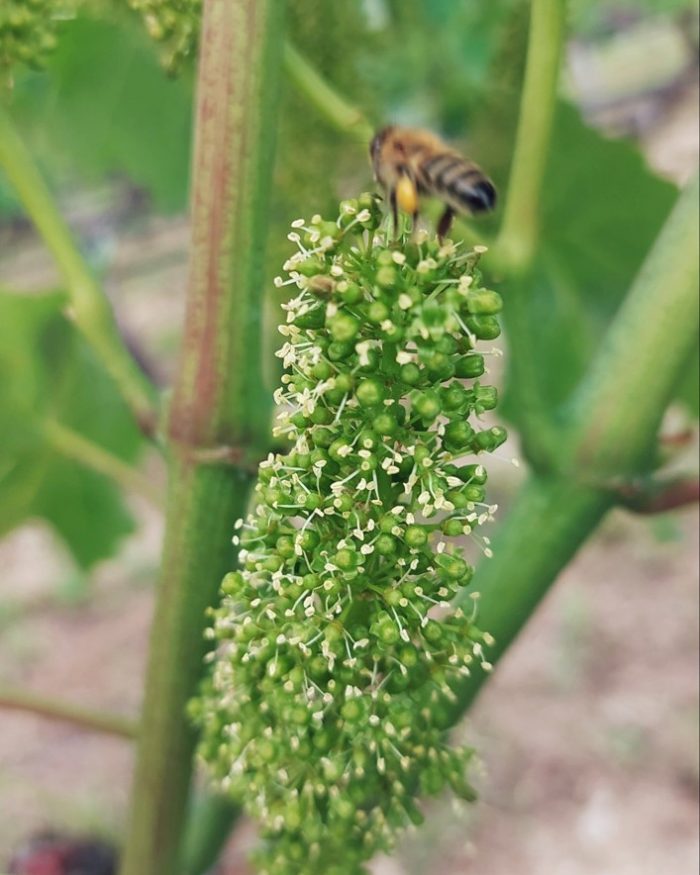
IN THE VINEYARD
Every vineyard is different. Every vine is different. That is why there is no single recipe for sustainable viticulture.
At Ktima KIR-YIANNI, we combine deep respect for generations of viticultural knowledge with scientific research and continuous experimentation. Rather than seeking fixed solutions, we constantly observe, test and adapt, always aiming to achieve the best possible balance for each vineyard—and often for each individual vine.
Our philosophy is built around three principles: Improve. Preserve. Optimise.
For more than five decades, our privately owned vineyards in Naoussa and Amyndeon have served as living laboratories where new ideas are tested, measured and refined. Working across two of Northern Greece’s most distinctive wine regions provides an exceptional opportunity to understand how varieties—and particularly Xinomavro—respond to different soils, altitudes and climatic conditions.
Continuous experimentation
Research is an integral part of our viticultural philosophy. Current projects include:
- Organic cultivation in dedicated vineyard blocks in both Naoussa and Amyndeon.
- Regenerative Viticulture, launched in 2024 in collaboration with the Yara Regenerative Knowledge Center and leading Greek universities, focusing initially on soil health through scientific monitoring and assessment.
- Phytotherapy, a pilot project exploring natural plant-based preparations produced from locally harvested species such as horsetail, fern and comfrey. Enriched with organic ingredients and tailored to the specific needs of each vineyard block, these treatments aim to enhance soil biology, strengthen vine resilience and support a healthier vineyard ecosystem.
- Registration of our vineyards with the Regenerative Viticulture Foundation, making Ktima KIR-YIANNI the first Greek winery to participate in this international initiative.
From soil to canopy
Our everyday vineyard management combines traditional practices with precision viticulture and continuous monitoring.
Key practices include:
- no tillage and permanent ground cover
- compost production from grape pomace
- cover crops using predominantly native legumes and cereals
- integrated pest management with biodiversity enhancement
- vine-by-vine canopy management, pruning and green harvesting
- targeted drip irrigation only where establishment or extreme weather conditions require it
Preserving Greece’s viticultural heritage
One of our most important long-term initiatives is KALI RIZA (“Good Root”), a project dedicated to locating, preserving and studying old, often ungrafted, pre-phylloxera Xinomavro vineyards growing on the sandy soils of Amyndeon.
Beyond conserving an invaluable genetic resource, the project also supports local growers whose knowledge and commitment are essential to preserving this unique viticultural heritage for future generations.
A landscape designed for learning
Our research is rooted in our vineyards.
Ktima Kir-Yianni – Naoussa
Total area under vine: 48 ha under vine / total area of 56 ha at the main vineyard of the Estate in Yiannakohori.
Further acreage at Gastra (0.6 ha), Arkohori (2.5 ha), Gallika (1.27 ha) and Trilofos (0.9 ha) that gives us an outstanding opportunity to work and undestand first-hand the extraordinary diversity of Naoussa villages (sub-terroirs).
– Orientation:
The hilly terrain of Yianakohori offers a unique diversity in terms of orientation.
The primarily orientation for our smaller vineyards:
Gastra: SE, Arkohori: E, Gallika: SE and Trilofos: NE
– Altitude: 250 – 280 meters. Arkohori reaches the highest parts of the region (310 meters)
– Climate: Mediterranean with mountainous influence. Notable diurnal temperature range.
Ktima Kir-Yianni – Amyndeon
- Total area under vine: 54 ha / total area of 59 ha (vineyards of Samaropetra, Palpo, Droumo, Rasto)
- Orientation: depending on the village (indications refer to the most part of the acreage)
Agios Panteleimonas: NW, Lakkia: SE, Fanos: S, Amyndeon: NW, Petres: SE
(We also collaborate with more than 110 local growers cultivating over 100 hectares across the PDO zone). - Altitude: from 550 to over 700 meters (depending on the site)
- Climate: Mild continental – the cooler wine region of Greece. Notable diurnal temperature range. 4 lakes work as stabilizers of average air temperature.
Important to know: Perched at 700+ meters—the highest point in the PDO Amyndeon zone—Samaropetra neighbours a protected NATURA 2000 area, reflecting our Estate’s close connection with a landscape of exceptional ecological value.
A culture of innovation
Innovation has always been part of Ktima KIR-YIANNI’s identity.
In the 1970s, our founder Yiannis Boutaris helped revive Naoussa through pioneering vineyard research that contributed to the renaissance of both the region and Xinomavro.
In Amyndeon, he was among the first to recognise the area’s remarkable potential for cool-climate white varieties, introducing Chardonnay, Sauvignon Blanc, Gewürztraminer, Assyrtiko, Malagousia and Roditis, while pioneering micro-terroir plantings that continue to shape our understanding of the region today.
Research, observation and continuous improvement remain at the heart of everything we do—because the most sustainable vineyard is one that never stops learning.
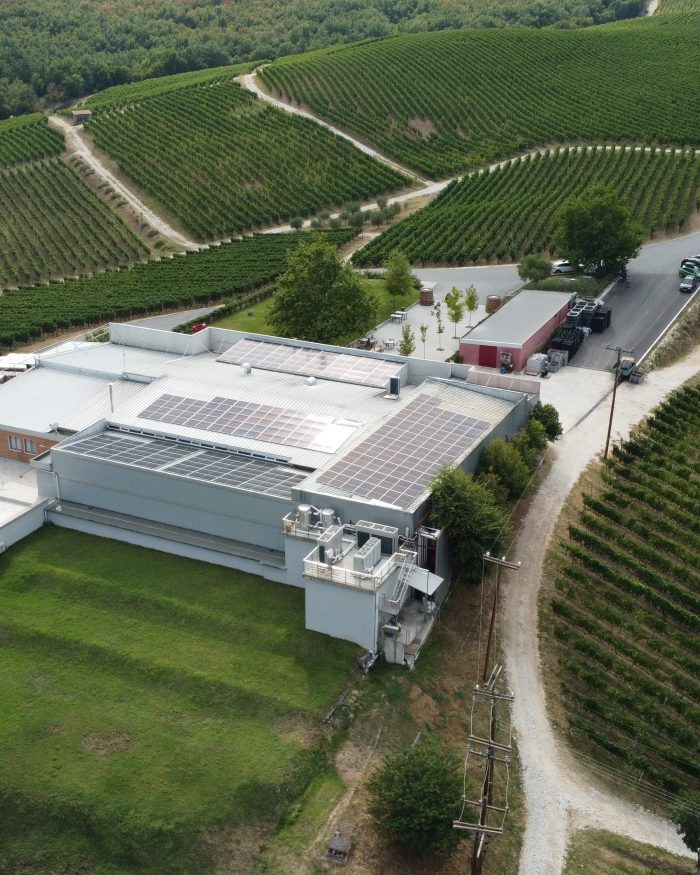
AT THE WINERY
Our commitment to sustainability continues beyond the vineyard. At our wineries in Naoussa and Amyndeon, we are continuously improving the way we produce wine, with the long-term ambition of creating increasingly circular, energy-efficient and resource-conscious operations.
Towards energy self-sufficiency
Reducing energy consumption while increasing the use of renewable energy is one of our key priorities.
We continuously upgrade our equipment with more energy-efficient technologies, including variable-speed motors, heat pumps that replace heating oil, and LED lighting throughout our facilities.
Rooftop photovoltaic systems and battery storage currently provide 31% energy self-sufficiency across our wineries (28% across our wineries and vineyards), with further battery capacity planned for 2027.
AMYNDEON WINERY
| 2022 | 2023 | 2024 | 2025 | |
| Grid Supply – KWh | 370,631 | 329,077 | 344,727 | 373.615 |
| Self-Consumption – KWh | 0 | 125.630 | 172.500 | 175.964 |
| Total Consumption – KWh | 370,631 | 454,707 | 517,227 | 549.579 |
| Self-reliance % | 0% | 27.6% | 33.4% | 32,00% |
NAOUSSA WINERY
| 2022 | 2023 | 2024 | 2025 | |
| Grid Supply – KWh | 248,160 | 218,377 | 226,454 | 207.296 |
| Self-Consumption – KWh | 67,409 | 73,990 | 112,500 | 93.582 |
| Total Consumption – KWh | 315,569 | 292,367 | 338,954 | 300.878 |
| Self-reliance % | 21.4% | 25.3% | 33.2% | 31,1% |
Closing the loop
We seek to give resources a second life wherever possible.
- Grape pomace is reused for compost production and for distilling traditional Greek tsipouro.
- Organic waste from our restaurant in Naoussa is composted and returned to our vegetable gardens and ornamental landscapes.
- Glass, paper, plastic, used oils and other recyclable materials are recycled through certified partners.
Looking ahead
Circularity also drives our future investments. We are currently developing an innovative biological wastewater treatment system based on circular economy principles, aiming to minimise waste, recover resources and eliminate the need for chemical treatment. The pilot project is expected to commence in 2027.
Vegan winemaking
All Ktima KIR-YIANNI wines are vegan certified. No animal-derived fining agents are used during the winemaking process.
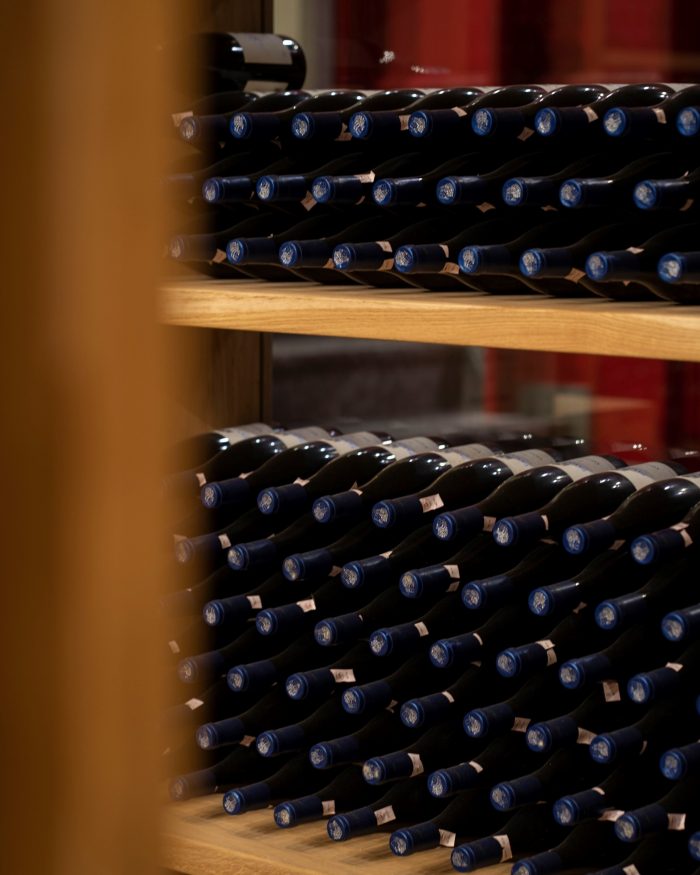
PACKAGING WITH A PURPOSE
Packaging represents one of the wine industry’s greatest opportunities to reduce its environmental footprint. At Ktima KIR-YIANNI, we continuously evaluate every component—from bottles to closures and cartons—to minimise emissions while preserving the quality and identity of our wines.
Lighter bottles, lower emissions
Glass is by far the largest contributor to packaging-related emissions. Reducing bottle weight is therefore one of the most effective ways to lower our carbon footprint.
Since 2022, we have steadily reduced the average weight of our bottles:
- 2022: 541 g
- 2023: 524 g
- 2024: 512 g
- 2025: 505 g
Today, approximately 80% of our bottles are classified as lightweight, reducing emissions associated with both glass production and transportation. At the same time, the average recycled glass content of our bottles has reached 65%, further lowering their environmental impact.
Small decisions. Meaningful impact.
In 2025, we reduced the bottle weight of our BLE TRACTER range by an additional 90 grams, inspiring our first consumer sustainability campaign, “BLE TRACTER GOES GREEN.”
The campaign celebrated a simple idea: that meaningful environmental progress is often achieved through thousands of small decisions made consistently over time.
More projects in progress
Beyond glass, we continue to improve every element of our packaging.
- We primarily use natural cork closures while gradually expanding the use of recyclable screw caps where appropriate.
- We are increasing the proportion of recyclable and responsibly sourced materials across our cartons and paper packaging.
- For our premium wines, wooden presentation cases are retained where they add long-term value, while we continue to evaluate lower-impact alternatives.
OUR SOCIAL CONTRACT
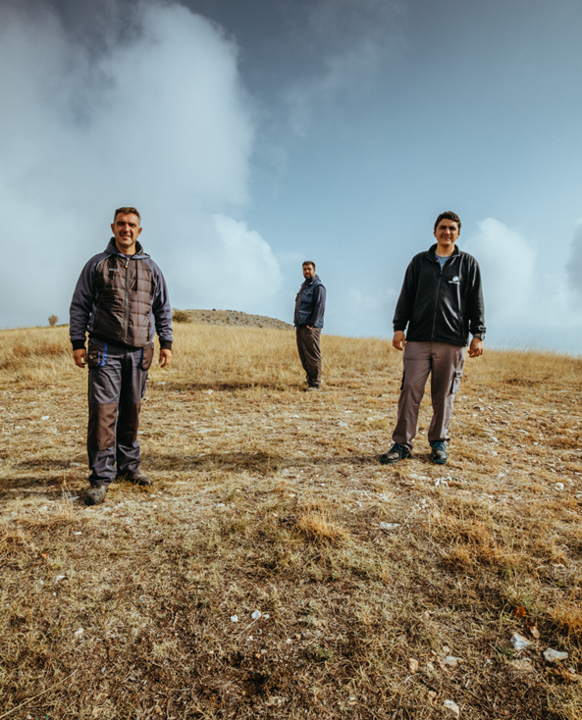
OUR PEOPLE
Behind every vineyard, every bottle and every innovation are the people who make them possible.
At Ktima KIR-YIANNI, we believe our greatest strength is our team. Their knowledge, passion and diversity of perspectives shape who we are and drive our continuous evolution.
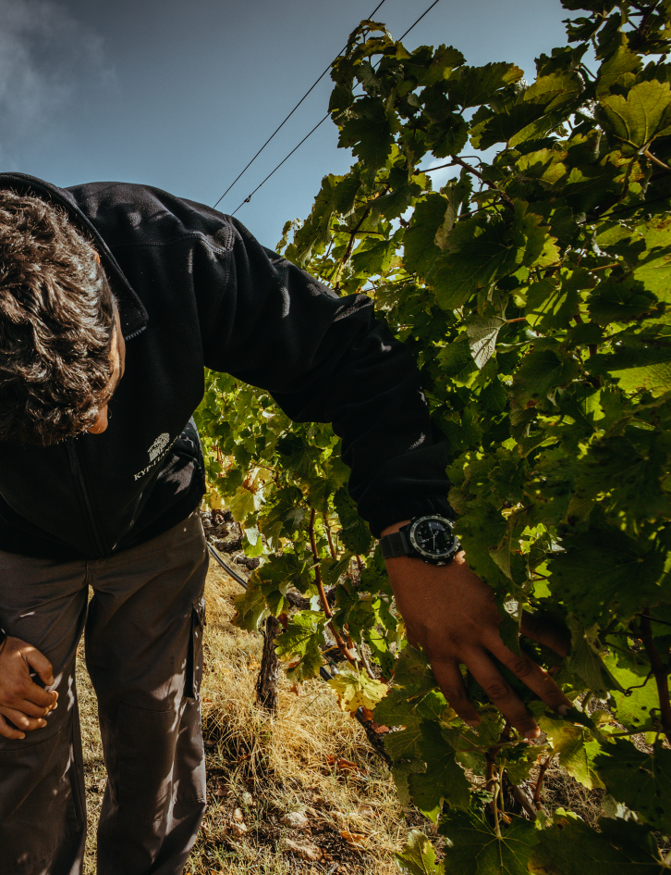
Today, we employ 116 permanent team members and more than 186 people throughout the year. Remaining deeply rooted in our regions, 97% of our employees come from Naoussa, Amyndeon and the surrounding communities, reinforcing our long-standing commitment to local employment and regional development.
We value long-term relationships, invest in professional growth and create opportunities for younger generations to build their future in the wine sector.
By fostering a workplace built on respect, inclusion and equal opportunity, we aim to grow together—because a sustainable future starts with people.
GROWING WITH OUR COMMUNITIES
For us, sustainability extends far beyond our vineyards and wineries. The long-term success of Ktima KIR-YIANNI is inseparable from the prosperity of the communities where we live and work.
Supporting local vine growers
Partnership has been at the heart of our philosophy since the very beginning.
When Yiannis Boutaris planted the first Xinomavro vineyards in Yiannakohori in 1969, he envisioned more than a winery. He believed in the potential of Naoussa and encouraged local growers to vinify their own grapes, helping lay the foundations for the region’s revival and the recognition of Xinomavro as one of Greece’s great wine varieties.
That philosophy continues today.
We work alongside local vine growers throughout the year, sharing technical expertise, providing continuous viticultural support and encouraging the transfer of knowledge from one generation to the next. Many of our wines are the result of these long-standing partnerships, reflecting the strength of collaboration and a shared commitment to quality.
In Amyndeon alone, we collaborate with more than 110 growers cultivating over 100 hectares of vineyards across the PDO zone.
Wine tourism as regional development
Our wineries are located in regions of exceptional natural beauty that remain relatively undiscovered by international tourism.
By investing in wine tourism, we aim not only to welcome visitors but also to create value for the wider local economy.
Since opening our Wine Tourism Centre in Naoussa, we have welcomed an average of 17,000 visitors each year, introducing guests to the wines, history, gastronomy and culture of the region while supporting local businesses and hospitality.
In 2024, we expanded this vision with the opening of our new tasting room in Amyndeon, creating a second destination where visitors can experience the unique identity of the region and discover one of Greece’s most distinctive cool-climate wine landscapes.
Through wine tourism, we seek to promote authentic, sustainable travel that benefits local communities while celebrating the places that shape our wines.
BEYOND WINE
For our founder, Yiannis Boutaris -affectionately known as Kir-Yiannis (kir meaning “sir” in Greek)- wine was never an end in itself. It was a way to protect landscapes, strengthen communities, preserve culture and inspire positive change. Today, that vision continues to shape the wider world of our Estate founder through initiatives that extend far beyond the vineyard.
ARCTUROS
More than thirty years before sustainability became part of everyday business language, the Boutaris family was already taking action to protect nature.
In 1992, driven by the urgent need to end the widespread practice of captive “dancing bears”, Mihalis Boutaris—Vice President of KIR-YIANNI and youngest son of our founder, Yiannis Boutaris—joined forces with his father to establish ARCTUROS, a non-profit environmental organisation based in Nymfaio, just 20 kilometres from our Estate in Amyndeon.
What began as a mission to protect bears and wolves soon evolved into one of Greece’s leading conservation organisations. Today, ARCTUROS works to safeguard wildlife, biodiversity and mountain ecosystems, while promoting the harmonious coexistence of people and nature through conservation, research and environmental education.
For KIR-YIANNI, ARCTUROS represents far more than a neighbouring organisation. It embodies the values on which our winery was built: responsibility, courage, long-term thinking and the belief that caring for the environment is inseparable from caring for the future.
KIR-YIANNI has proudly supported ARCTUROS since its foundation, helping raise awareness of its mission and contributing to the protection of Greece’s unique natural heritage.
Photo credit: ARCTUROS
BIBON - Bibliotecha Oenologica
Yiannis Boutaris believed that knowledge should be shared, questioned and continuously enriched. This belief inspired the creation of BIBON – Bibliotecha Oenologica, Greece’s first wine library, established by the Boutaris Foundation in collaboration with the Public Central Library of Veria and the non-profit civil partnership Future Library.
Located in the heart of Naoussa, inside the listed building that once housed the first Boutaris family winery, BIBON is both a symbol of Greek wine’s heritage and a place where new ideas, research and collaboration come to life. More than a library, BIBON is a living centre for wine knowledge—a place where professionals, researchers, students and wine lovers come together to explore Greek wine with curiosity, openness and respect for its history while shaping its next chapter.
Faithful to Yiannis Boutaris’ vision, BIBON bridges heritage with innovation, connecting tradition with science, books with new technologies, sensory experiences with research and data, and local identity with an international outlook. Through its collections (more than 2,000 titles), exhibitions, educational programmes and public events, BIBON promotes wine culture while fostering dialogue and collaboration among winemakers, vine growers, scientists, students, businesses, local communities and wine enthusiasts. At the same time, it supports research that contributes to the long-term resilience and sustainability of Greek viticulture.
Since its opening, Konstantinos Lazarakis MW, the first BIBON Ambassador, has served as Book Curator, helping shape the library’s unique collection and reinforcing its commitment to excellence, education and the international wine community. BIBON is also proud to count on the support of Naoussa Wines and the Municipality of Heroic City of Naoussa, whose partnership strengthens its role as a cultural and educational hub for Greek wine.
Ktima KIR-YIANNI is the principal donor and operating partner of BIBON, ensuring its long-term development and reaffirming our long-term commitment to preserving, advancing and sharing knowledge, wine culture and the value of working together.
Above all, we leave our (wine) egos outside the room and let questions lead the conversation.

